
Beyond the SmartNIC: building a scalable server platform for 100G today and multiple 400G tomorrow
High-performance networking does not end at the Ethernet port. As speeds rise from 100G, 200G to 400G and beyond, every part of a server – PCIe topology, memory bandwidth, CPU resources, cooling, and storage – can constrain performance, even when an FPGA SmartNIC processes packets at full line rate.
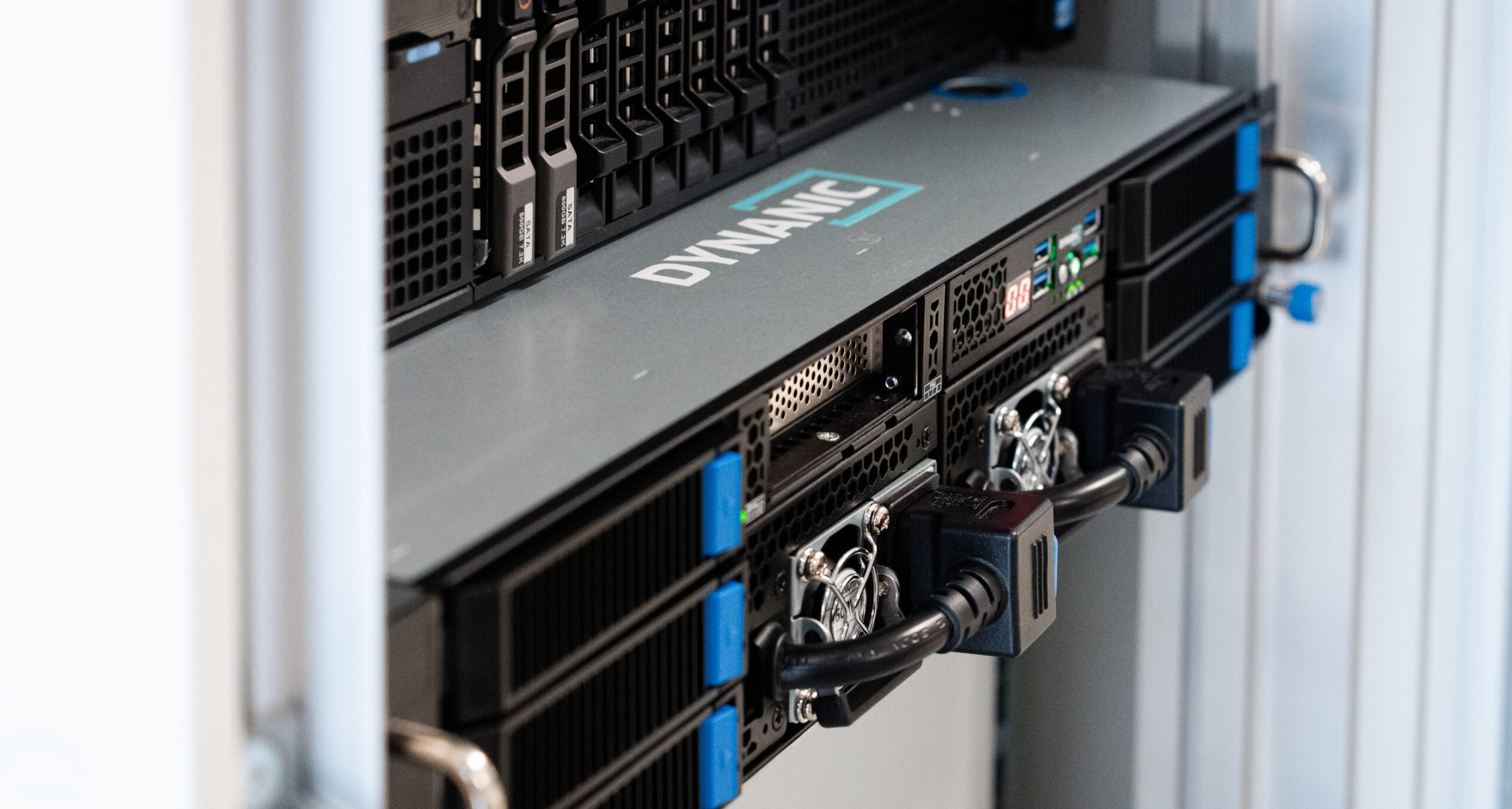
DYNANIC normally integrates its technology into servers selected by customers. For projects requiring a complete system, however, we also help select, configure, and deliver the underlying hardware. In a recent project, we chose an accelerator-oriented ASUS platform as the basis for our server: an initial 100G deployment with a clear upgrade path to multiple 400G network interfaces.
Why the server behind the SmartNIC matters
At 100G and more, a free PCIe slot is not enough. The complete system must offer suitable PCIe connectivity, memory bandwidth, host processing, airflow for passive FPGA heatsinks, redundant power, and storage expansion. The best configuration depends on the actual workload rather than the largest available CPU or memory specification.
We work with several integration partners to find the most suitable server platform for each customer, taking into account technical requirements, component availability, delivery times, and upgrade options. This flexibility is especially important when high-end processors, memory modules, or particular server configurations are difficult to source.
The selected 400G SmartNIC server platform
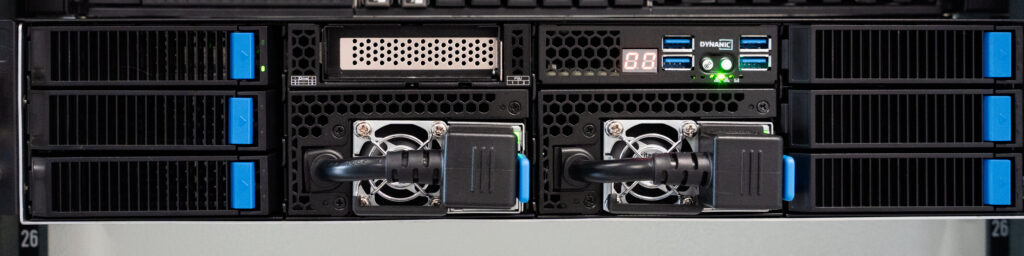
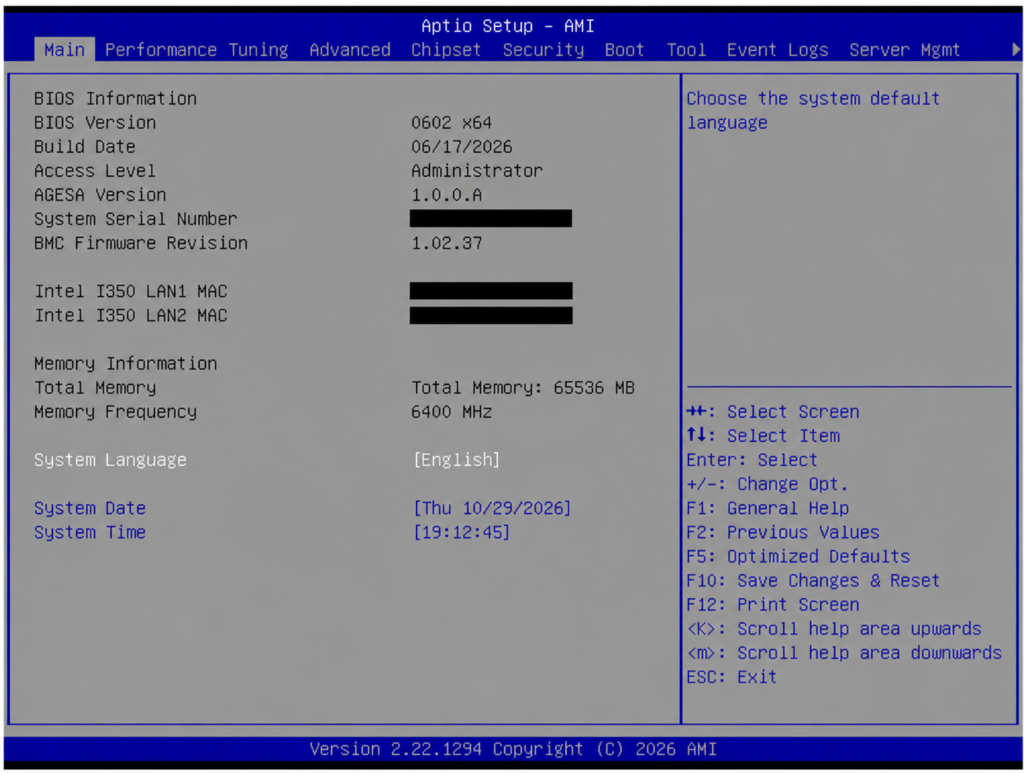
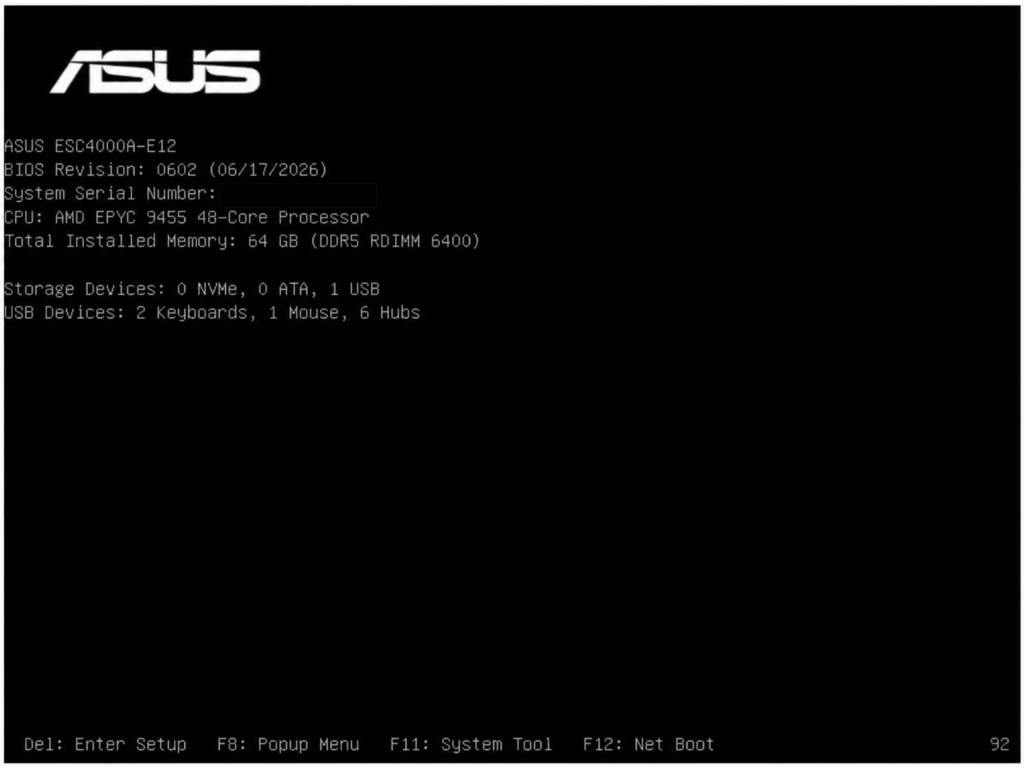
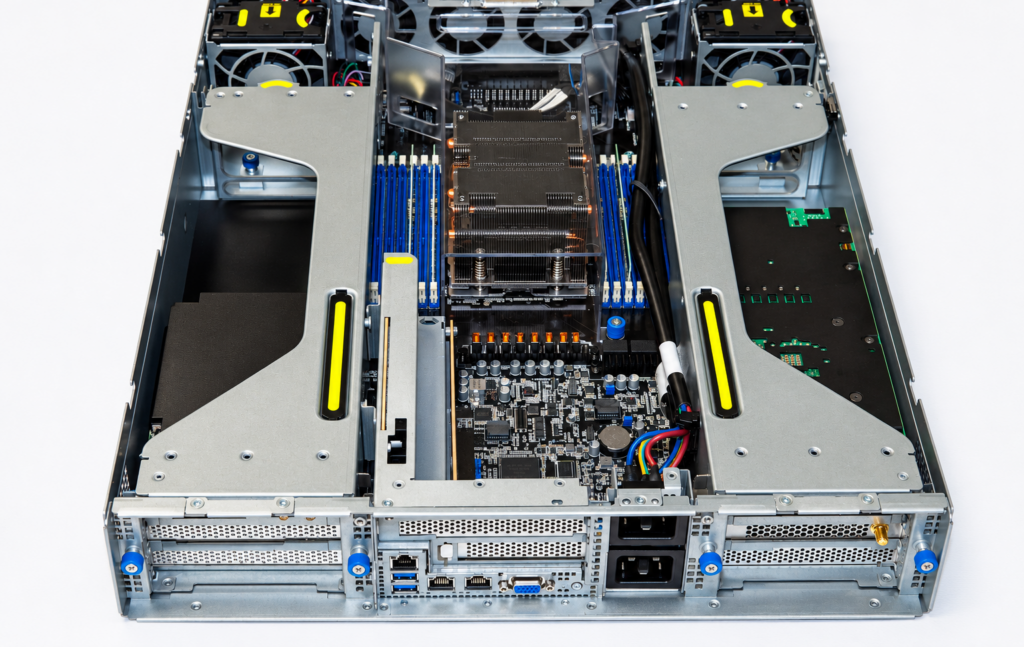
The ASUS ESC4000A-E12 is a single-socket AMD EPYC server designed for accelerator-heavy installations. Its four dual-slot PCIe Gen5 x16 positions, twelve DDR5 memory channels, accelerator-oriented airflow, and redundant high-efficiency power supplies make it a strong foundation for FPGA networking. The selected configuration is a single-socket 48-core AMD EPYC; 128 GB DDR5 ECC RDIMM (4 × 32 GB), validated at 6400 MT/s, Silicom N6010 running DYNANIC for the initial 100G deployment and enterprise 960GB NVMe system storage; and provision for further NVMe expansion.
N6010 and ThunderFjord: 100G today, 400G tomorrow
The Silicom N6010 offers up to two 100G ports and a PCIe Gen4 host interface, while Silicom ThunderFjord provides two 400G ports and PCIe Gen5 x16 connectivity. Both use Agilex-family FPGA technology and can host DYNANIC’s packet-processing, filtering, traffic-steering, and DMA architecture. ThunderFjord extends the same approach to a significantly higher networking class, including multi-packet-per-clock processing.
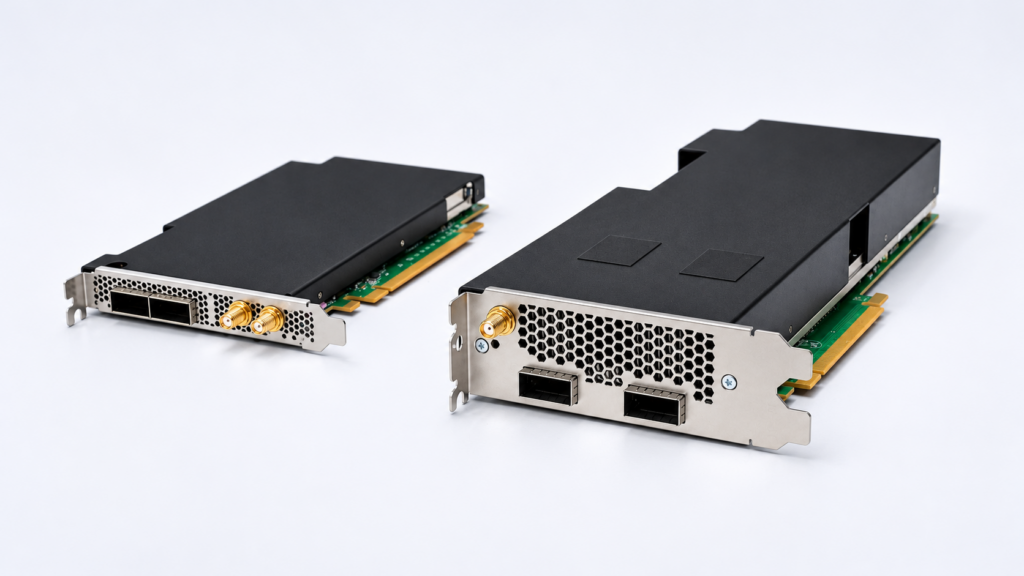
The cards therefore represent different performance generations. Customers can preserve a familiar architectural approach as their networking needs grow. Technical details are available in the N6010 solution brief and the ThunderFjord solution brief.
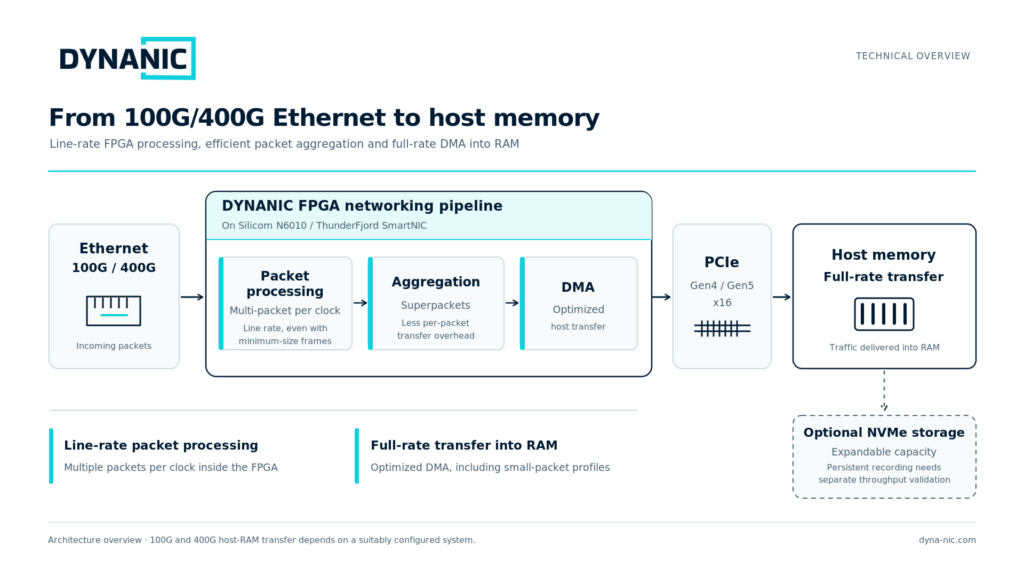
Line-rate FPGA processing and full-rate DMA
A 400G Ethernet port alone does not guarantee that the full traffic stream reaches host memory. Small packets are particularly demanding: a pipeline may process them at line rate while conventional DMA and host handling introduce substantial per-packet overhead.
DYNANIC addresses both sides of the problem. Its FPGA pipeline processes multiple packets per clock, including minimum-sized frames, without requiring extreme FPGA frequencies. Its DMA architecture can aggregate small packets into larger “superpackets” to use PCIe more efficiently. Together with the host software, this enables sustained full-rate 100G and 400G traffic transfer into RAM, including demanding small-packet profiles, on suitably configured platforms.
Our CTO Lukáš Kekely presented the underlying approach at FPGA Conference Europe 2025 in “How to transfer the shortest packet at sustained 400Gbps over PCIe”. This distinction – wire-speed processing versus full-rate transfer into host memory – is central to designing useful high-speed networking systems.
CPU offload and practical 400G SmartNIC server sizing
Software-only packet processing can consume substantial CPU resources as packet rates increase. DYNANIC can offload parsing, filtering, classification, and traffic steering into the FPGA, leaving the CPU to handle the application work that genuinely belongs there. This changes the economics of server sizing: CPU core count need not scale directly with the maximum Ethernet port rate.
For this platform, a single-socket 48-core CPU provides considerable host-side capacity while avoiding the complexity of an unnecessarily large dual-socket system. The optimal processor still depends on how much traffic reaches software and what the application does with it; FPGA acceleration complements rather than eliminates the CPU.
Memory bandwidth: watch the DIMM population
For high-speed DMA, memory bandwidth can be as important as memory capacity. The platform offers twelve DDR5 channels, while the initial 128 GB configuration populates four of them. Additional DIMMs can expand both capacity and channel-level bandwidth, but the number and placement of modules must be planned carefully.
An often-overlooked detail is that some server platforms – particularly configurations with more DIMMs per channel or heavily populated dual-socket systems – reduce the maximum supported memory speed as DIMM population increases. A platform that supports a given DDR5 speed with a few modules may not maintain it when every slot is filled. The exact limits depend on the CPU, motherboard, BIOS, and DIMM population rules, so the final expansion scenario matters just as much as the initial benchmark.
PCIe expansion for multiple ThunderFjord cards
The ESC4000A-E12 provides four full-bandwidth PCIe Gen5 x16 dual-slot accelerator positions. DYNANIC has already validated reliable operation with multiple ThunderFjord cards in this platform, and the system is ready to accommodate up to four such accelerators. Each ThunderFjord has two 400G ports, so four cards offer a nominal aggregate port capacity of 3.2 Tb/s in a single 2U server.
Port capacity is not the same as guaranteed aggregate host-memory throughput. PCIe, memory and application requirements must be considered together. The value of the server architecture is its ability to scale the networking hardware while tailoring the host resources to the intended workload.
Cooling and power for passive FPGA accelerators
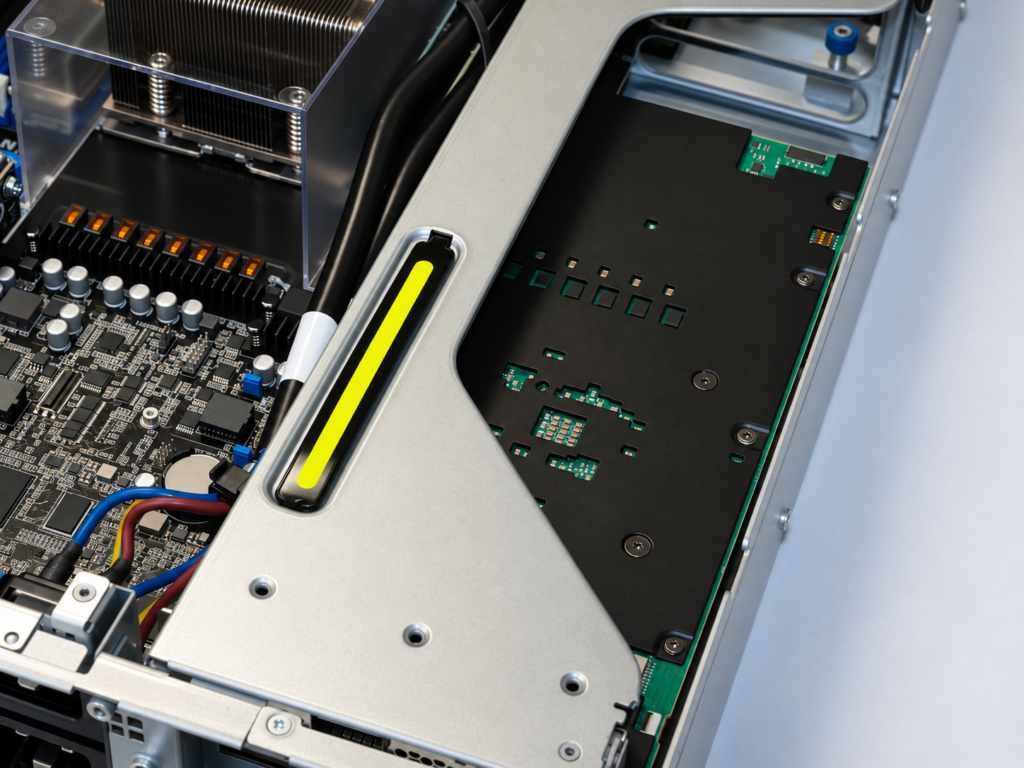
ThunderFjord uses a passive heatsink and relies on server airflow. The accelerator-oriented chassis offers the cooling architecture needed for this class of card, rather than simply providing a mechanically compatible slot. Redundant high-efficiency power supplies support dependable operation and expansion. With ThunderFjord’s maximum board TDP of 225 W, four cards represent up to 900 W of accelerator power, within the server’s intended accelerator power class.
NVMe expansion beyond host RAM
For some applications, full-rate delivery into RAM is the objective; for others, captured data must also be written to persistent storage. The selected platform supports additional high-speed NVMe storage through front-accessible hot-swap bays, giving customers room to expand storage without replacing the server.
The distinction is important: lossless transfer into RAM does not by itself guarantee continuous lossless disk recording. A sustained 400 Gb/s stream is approximately 50 GB/s before capture-format and storage overhead, requiring a carefully designed multi-drive subsystem and end-to-end testing. Here, the server provides the expansion foundation rather than an untested claim of 400G disk-write performance.
From components to a complete 400G SmartNIC server
Choosing a server is only the first step. The real work is aligning PCIe topology, firmware, DIMM population, accelerator dimensions, cooling, power, and availability. By working with multiple hardware partners, DYNANIC can select and validate a platform around the networking requirements rather than expect the application to adapt to a generic server.
Customers who already have a suitable server can integrate DYNANIC FPGA SmartNIC technology into their existing environment; the DYNANIC system requirements are the place to start. Those starting from scratch can rely on DYNANIC to help specify, validate, and deliver a complete 400G SmartNIC server. At 400G and beyond, performance comes from engineering the path from Ethernet through the FPGA and PCIe into host memory – and, where required, onward to storage.
Further reading
Silicom N6010 solution brief (PDF)
Silicom ThunderFjord solution brief (PDF)
DYNANIC at FPGA Conference Europe 2025
ASUS ESC4000A-E12 product page
Silicom ThunderFjord product page